Branding a Clinic in Dubai: Identity, Arabic Type, Signage and Patient Trust
A clinic brand has a harder job than most. A café can afford to be playful and a fashion label can afford to be strange, but a patient walking into a dental practice in Al Barsha or a physiotherapy centre in Jumeirah is often anxious, sometimes in pain, and always asking one quiet question: can I trust these people? Every piece of your identity either answers that question or gets in the way. This guide walks through how clinics, medical centres and wellness practices in Dubai can build a brand that feels calm, credible and properly bilingual, from the first logo sketch to the sign above the reception desk.
It is written from the working notes of the branding team at Oxedge, a Dubai studio that designs logos and identity systems in English and Arabic together. If you want the short version of how that service works, the overview is at oxedge.com/logo-design-branding-dubai. The rest of this article is the long version, aimed at clinic owners, practice managers and marketing leads who want to understand what good looks like before they brief anyone.
Why healthcare branding in the UAE is different
Three things make clinic branding in Dubai its own discipline.
- Regulation shapes what you can say. Health advertising in Dubai is reviewed by the Dubai Health Authority, so claims, before-and-after imagery and promotional language are limited. Your brand has to build trust through tone, clarity and consistency rather than bold promises.
- Your patients read in two scripts. A large share of patients will meet your name in Arabic first, on insurance paperwork, a referral note, Google Maps or a WhatsApp message from a relative. If the Arabic version of your name looks like an afterthought, it signals that Arabic-speaking patients are an afterthought too.
- The physical space is part of the brand. Patients spend time in your waiting room, read your forms, look at your staff uniforms and walk past your façade. A clinic identity lives on far more physical surfaces than most service businesses.
Put together, this means a clinic brand should be quieter than you might expect, more systematic than a typical small-business logo, and designed for Arabic and English at the same time.
Start with positioning, not with a logo
Before any drawing starts, it helps to write down a few plain sentences about who the clinic serves and how it wants to feel. A paediatric dental practice, a cosmetic dermatology clinic and an occupational health provider for construction firms may all be "clinics", but their brands should look nothing alike.
Questions worth answering first
- Who is the primary patient, and who makes the booking decision? (For paediatrics it is the parent; for corporate health it may be an HR manager.)
- Is the clinic premium, mid-market or high-volume? Each implies different materials, colours and type.
- Which languages do patients use most: Arabic, English, Hindi, Urdu, Tagalog, Russian? Arabic and English are the baseline in Dubai, but signage and forms may need more.
- What should a first-time patient feel within ten seconds of seeing the brand: reassured, energised, pampered, efficient?
- Which three competitors do patients compare you with, and how do you want to look different from them?
A good studio will turn these answers into a short creative brief. At Oxedge that conversation is usually a 30-minute call, and the quote follows from it, so the scope matches what the clinic actually needs rather than a generic package.
Designing the logo suite for a clinic
Clinics rarely need a single logo. They need a small family of marks that work on very different surfaces, from a tiny favicon in a browser tab to a three-metre illuminated sign on Sheikh Zayed Road.
The four pieces every clinic should have
- Main logo: the full name and symbol, used on the website header, letterheads and the main façade sign.
- Stacked version: a more compact arrangement for square spaces such as social profiles, lanyards and door vinyls.
- Icon or symbol: a standalone mark for app icons, uniform embroidery and wayfinding.
- Favicon: a simplified version that still reads at 16 pixels.
Each of these needs an English lockup and an Arabic lockup that feel like the same brand. That is where most clinic identities fall down: the English wordmark is carefully crafted and the Arabic is typed out in whatever font was installed on the designer's laptop.
Avoiding healthcare clichés
Crosses, hearts, stethoscopes, abstract human figures with raised arms and swooshes in teal and blue are everywhere in UAE healthcare. They are not wrong, but they make it hard to be remembered. A stronger route is usually a distinctive wordmark with one simple, ownable shape, chosen because it reflects something specific about the practice: its specialty, its name, its neighbourhood or its founder's story.
A quick test: cover the name and look only at the symbol. If it could belong to any of fifty clinics in Dubai, keep working.
Arabic and English, designed as a pair
For a clinic, bilingual design is not decoration. It is patient safety and accessibility. Patients need to read directions, consent forms and medication labels comfortably in the script they know best.
What "designed as a pair" means in practice
- The Arabic name is chosen deliberately. Sometimes that is a transliteration, sometimes a translation, sometimes a different but related name. Each option should be tested with native speakers so it does not sound awkward or carry an unintended meaning.
- The Arabic letterforms are drawn or carefully selected to match the weight, rhythm and personality of the Latin wordmark, rather than picking the nearest available font.
- Both versions are balanced in visual size. Arabic often needs a slightly larger point size to feel equal to Latin text, and its ascenders and descenders behave differently.
- Layouts are planned for right-to-left reading. Forms, signage and web pages are mirrored properly, not just translated.
Oxedge has written more about the pitfalls of translating rather than designing for Arabic in Arabic-first UX: twelve things that break when you just translate. Most of those lessons apply directly to clinic forms, booking screens and patient leaflets.
Colour, type and imagery that calm rather than alarm
Colour
Healthcare palettes in Dubai lean heavily on blue and teal because they feel clean and clinical. That is fine, but a clinic can still be distinctive by choosing a less common primary colour, pairing it with warm neutrals and using accent colours sparingly. Practical checks matter more than theory:
- Text on coloured backgrounds must meet contrast guidelines so older patients and people with low vision can read it.
- Colours should be specified for screen (HEX and RGB), print (CMYK) and signage or paint (Pantone or RAL references), so the façade matches the website.
- Avoid relying on red and green alone to signal meaning on forms or wayfinding, because of colour blindness.
Typography
Choose one Latin typeface and one Arabic typeface that work together, each with enough weights for headings, body text and small print. Clinics produce a lot of dense information, so legibility at small sizes is more important than personality in the body font. Personality can live in the logo and headings.
Photography and illustration
Stock photos of smiling models in white coats undermine trust because patients know they are not your team. Real photos of your clinicians, rooms and equipment, shot in natural light and edited consistently, do far more. Where illustration is used, keep it simple and respectful, and check that any depiction of people reflects the diversity of Dubai's patient base.
Testing the identity on real clinic pieces
An identity only proves itself when it is applied. Before signing off, a clinic should see its new brand on the pieces patients actually touch.
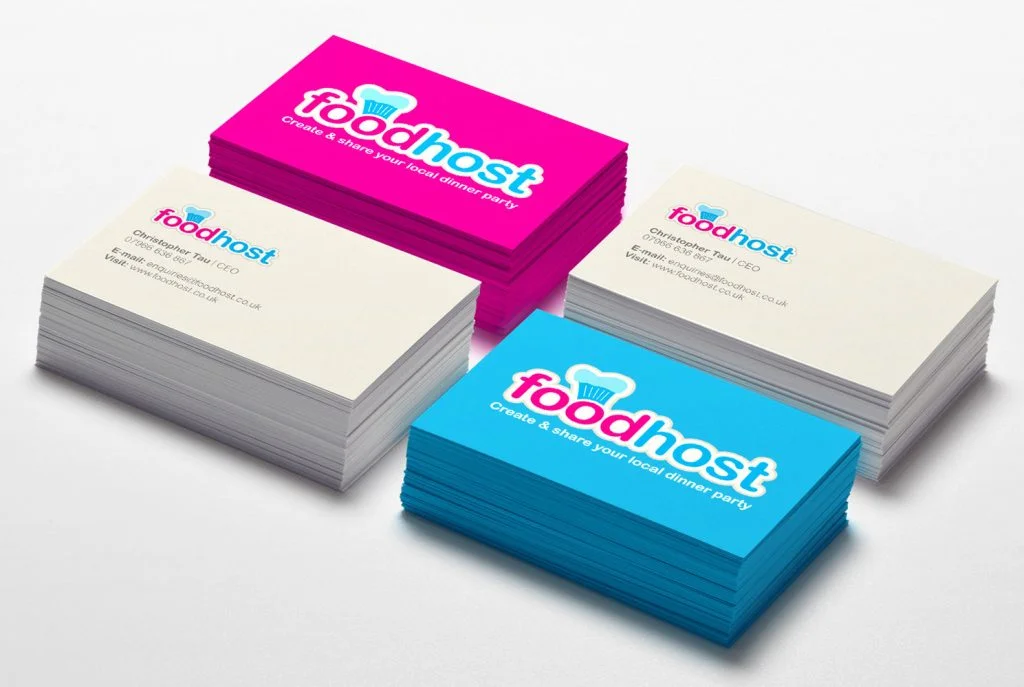
Oxedge tests every identity on real mockups like the stationery above before handover. For a clinic, the test set usually includes:
- Appointment cards, prescription pads and letterheads in Arabic and English.
- Patient registration and consent forms, laid out right-to-left and left-to-right.
- Staff uniforms and name badges, including embroidery limits on small marks.
- Exterior signage, reception wall graphics and door wayfinding.
- The website header, booking page and Google Business Profile images.
- Instagram and WhatsApp profile pictures, which are tiny circular crops.
Problems that never show up on a white presentation slide become obvious on a 12-millimetre badge or a dimly lit corridor sign.
Signage, wayfinding and the physical space
For many clinics the sign is the single most expensive brand asset, and it is the one patients see first. Dubai signage usually needs municipality and landlord approval, and malls and business towers often have their own rules on size, lighting and placement. Plan for these points early:
- Bilingual hierarchy. Decide whether Arabic sits above, beside or below English, and keep that rule consistent everywhere.
- Illumination. Thin strokes in a logo can disappear when backlit. Your designer should provide a signage-specific version if needed.
- Wayfinding inside. Room numbers, specialty names and directions should use the same type and colour system, with Arabic and English given equal clarity.
- Materials. Matte finishes reduce glare in bright reception areas; frosted vinyl with the brand pattern can add privacy to consultation rooms.
Digital touchpoints: website, booking and maps
Most new patients discover a clinic online. Your brand should feel the same on a phone screen as it does in the waiting room.
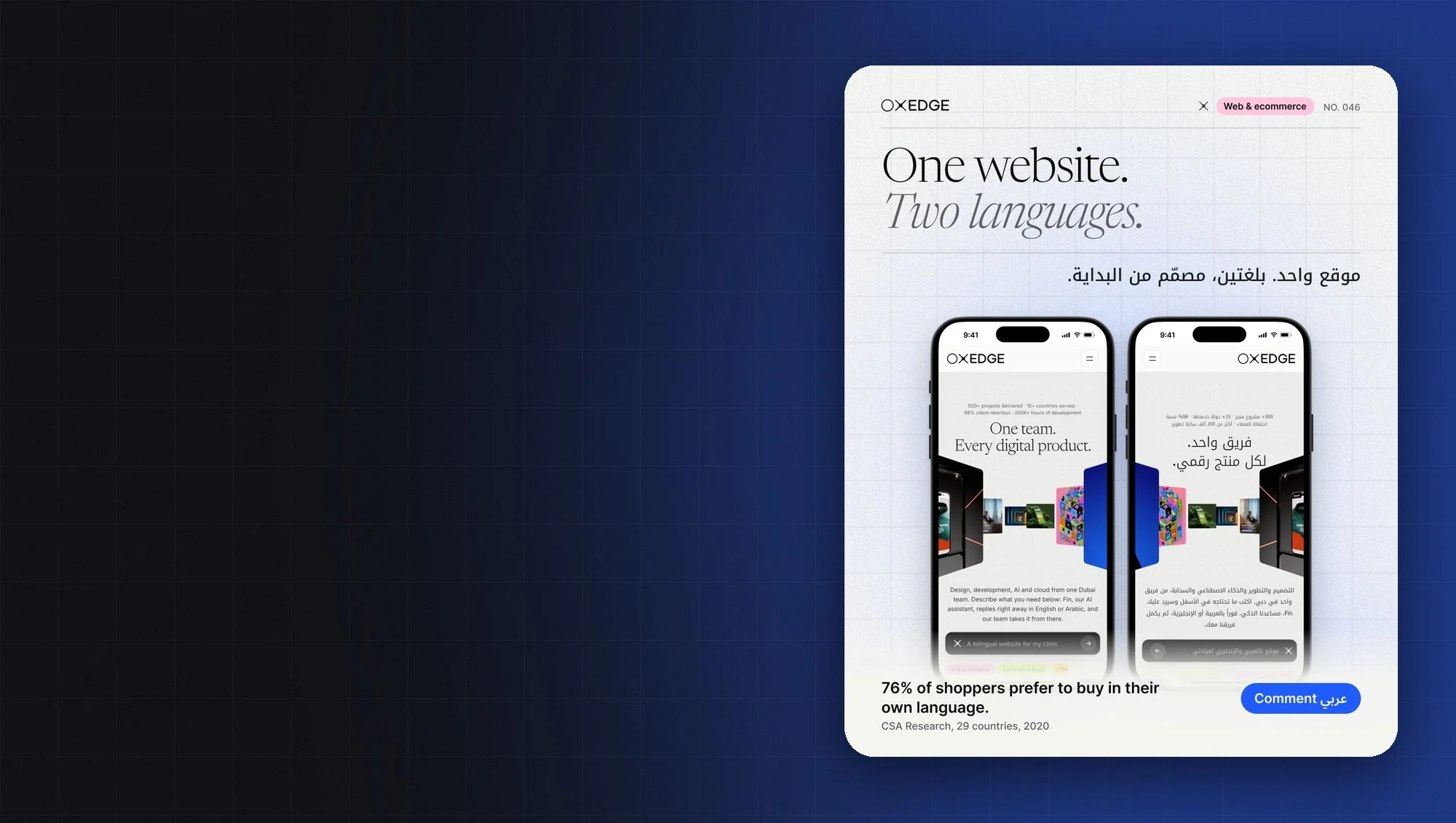
- A bilingual website where the Arabic version is a full, equal experience rather than a partial translation.
- Clear booking flows that use the brand colours for primary buttons and keep everything else calm.
- A Google Business Profile with consistent name, logo, photos and opening hours in both languages.
- WhatsApp Business branding, including a profile image that reads at very small sizes and a greeting message in the clinic's tone of voice.
Oxedge's research on how many UAE companies actually offer Arabic online is summarised in Arabic websites in the UAE: how many company sites actually offer one?. The short answer is fewer than you would expect, which is an opportunity for clinics that do it properly.
Brand guidelines your front desk can actually use
A clinic brand is maintained by receptionists, practice managers and freelance designers long after the branding studio has finished. Guidelines should be short, practical and bilingual where it helps.
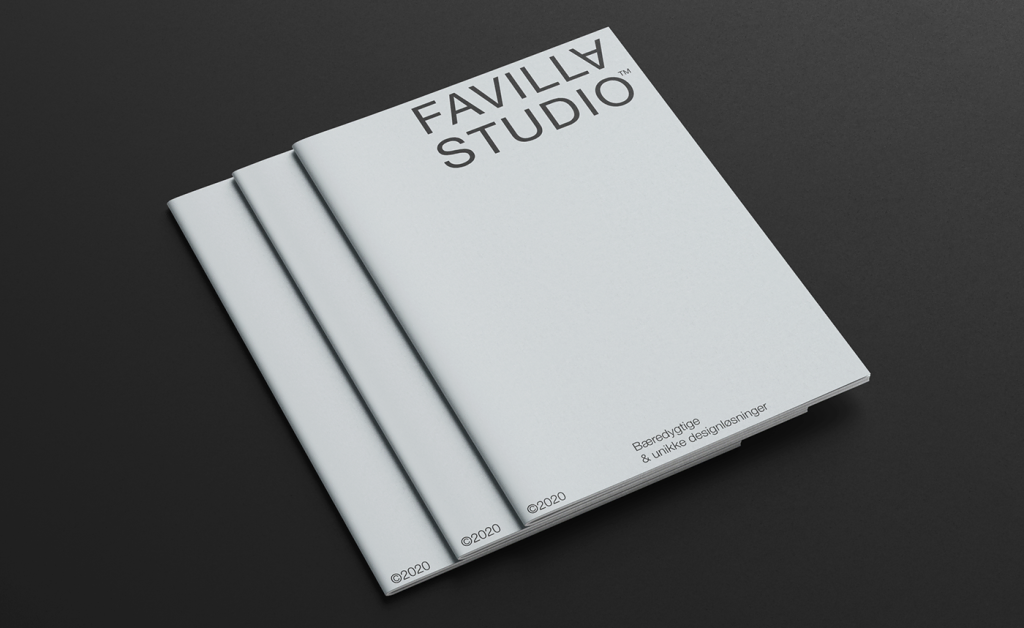
- Logo usage: which version goes where, minimum sizes and clear space.
- Colour and type specifications with real examples.
- Templates for appointment reminders, social posts, notices and price lists.
- Tone of voice notes in both languages: how to greet, how to apologise for delays, how to explain fees.
- Photography do's and don'ts.
Oxedge delivers a social kit and editable templates alongside the guidelines, plus master files and a written transfer of rights, so the clinic owns its identity outright.
Timelines, budgets and trademarks
A clinic refreshing an existing logo should typically allow six to ten weeks for a careful bilingual refresh. A full rebrand of a multi-branch medical group, including signage and digital rollout, often takes ten to sixteen weeks. Rushing this is a false economy, because signage and printed materials are costly to redo.
Clinics should also budget for trademark registration in the UAE. At the time of writing, official fees are around AED 6,500 per class, and many healthcare brands register in more than one class. Searching for conflicts before the design is final saves painful rework.
For studio fees, Oxedge quotes after the initial brief rather than from a fixed price list, with prices excluding 5% VAT and payment typically split 40/40/20 across the project. If you are weighing a refresh against a full rebrand, the article rebranding a UAE business walks through the decision in more detail.
A simple checklist before you launch
- Arabic and English names tested with real patients or staff.
- Logo suite approved in both languages, at all four sizes.
- Colours specified for screen, print and signage.
- Forms, cards and uniforms mocked up and checked by front-desk staff.
- Signage approved by the landlord and authorities.
- Website, Google profile and WhatsApp updated on the same day.
- Guidelines and templates shared with everyone who creates materials.
- Trademark application filed.
Frequently asked questions
Do small clinics really need a full brand system?
Not a huge one, but they do need the basics done properly: a bilingual logo suite, a colour and type system, and templates for the materials staff produce every week. Without those, a small clinic quickly ends up with five slightly different logos and inconsistent forms, which erodes trust.
Should the Arabic name be a translation or a transliteration?
It depends on the name. Descriptive English names often translate well; founder names and invented words usually work better transliterated. The important step is testing the result with native speakers before committing.
How long does a clinic rebrand take in Dubai?
A careful refresh usually takes six to ten weeks. A full rebrand with new signage across several branches is closer to ten to sixteen weeks, depending on approvals and fabrication.
Can we keep our current logo and just add Arabic?
Sometimes. If the existing English logo is strong, a studio can design a matching Arabic lockup. If the original logo was built without Arabic in mind, a light refresh of both is often the better route.
Who owns the final files?
You should. Ask for master files in vector formats and a written transfer of rights. Oxedge includes both as standard.
Talk to Oxedge about your clinic brand
If you are opening a new practice or tidying up an existing one, Oxedge can help with naming, a bilingual logo suite, guidelines and rollout across signage and digital. See the service page at https://oxedge.com/logo-design-branding-dubai/, read the Arabic version at oxedge.com/ar/logo-design-branding-dubai, or visit the main site at oxedge.com.
Oxedge, Office 208, Bu Shaqer Building, Al Garhoud, Dubai. Phone: +971 50 815 3521. Email: info@oxedge.com. Hours: Monday to Saturday, 9am to 5pm; Sunday closed.